


Nickel-Free Titanium Rings for Sensitive Skin
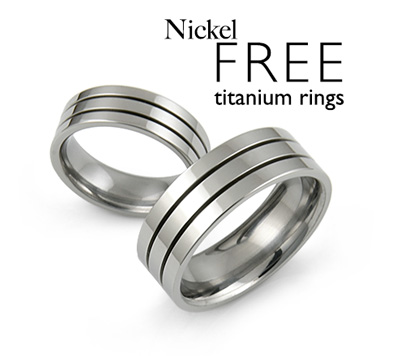
Nickel allergy, medically known as allergic contact dermatitis, is one of the most common metal reactions people experience. If a new ring or pair of earrings leaves your skin red, scaling, weeping, or itchy — sometimes within days, sometimes only after months of wear — nickel is very often the cause.
Nickel doesn't only show up in inexpensive costume jewelry. Even high-carat gold wedding rings can contain trace amounts, and even a trace can trigger a severe reaction in some people. The reaction can also develop after years of wearing gold or silver without any issue, which is part of why it catches people off guard. Once the sensitivity sets in, it rarely goes away on its own — the most effective way to prevent it is reducing exposure, and if you notice the first symptoms, switching to a hypoallergenic metal like titanium or platinum is the most reliable path forward.
Our Titanium Rings and Jewelry Are 100% Nickel-Free and Cobalt-Free
Titanium and platinum are the only metals proven not to cause allergic contact dermatitis (nickel allergy), and are completely safe for people suffering from this condition. This is true for all three grades of titanium we use, including Ti-CP, Ti-6/4, and Ti-6/6/2. Our titanium is also cobalt-free — cobalt is a less common but real metal allergen, and while it's sometimes used as a binder in conventional tungsten carbide, it isn't present in any grade of titanium we use, and our own tungsten carbide rings are cobalt-free as well.
 Hypoallergenic Titanium Jewelry
Titanium is one of the few metals that are completely compatible with our body chemistry and will not cause any allergic reaction, skin irritation, or discoloration. It's safe for people suffering from nickel allergy, as well as effective in preventing it. But changing to titanium rings is no sacrifice — in addition to being hypoallergenic, these rings are lightweight, durable, and comfortable. And may we also mention — beautiful.
Switching to titanium isn't a compromise on style — it's simply a safer material choice. Titanium is lightweight, comfortable for daily wear, and holds up to years of use without the finish breaking down the way lower-grade metals can.
Stainless steel and white gold both carry a real risk for nickel-sensitive wearers. White gold is frequently rhodium-plated over a nickel-alloy base, so the risk resurfaces as the plating wears thin. Stainless steel can include nickel in its alloy as well, and reactions vary by composition and by person. Titanium and platinum remain the two metals proven not to trigger allergic contact dermatitis, and platinum's higher cost is part of why titanium has become the more practical hypoallergenic choice for everyday rings.
Can I wear titanium if I already have a nickel allergy?
Yes — titanium is one of the two metals proven safe for nickel allergy sufferers, along with platinum, and switching to it is one of the most effective ways to stop the reaction from recurring.
Am I also safe if I have a cobalt allergy?
Yes. None of our titanium grades contain cobalt, which is a separate but related metal allergen sometimes used as a binder in other manufacturers' hard-metal rings — our own tungsten carbide rings are cobalt-free too.
Will titanium ever cause irritation over time?
No. Because titanium contains no nickel and is fully biocompatible, it doesn't build up the trace exposure that causes reactions to develop later, the way some gold and silver pieces can.
Is titanium as durable as it is hypoallergenic?
Yes — titanium is lightweight, holds its shape well, and resists scratching better than most traditional ring metals, so the same ring that's safe for sensitive skin is also built to hold up to daily wear.
Have more questions about nickel allergy and titanium jewelry? See our titanium jewelry FAQ page for answers on hypoallergenic grades, cleaning, and more.



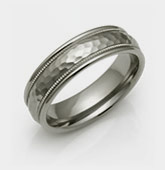
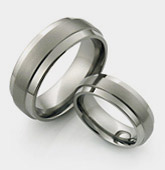
Titanium Style is an online Titanium Rings store. We specialize in custom titanium ring design, inlaid titanium rings, black ceramic rings, titanium wedding bands, chains, necklaces, bracelets, tungsten rings, and more.
1-513-520-0527
sales@titaniumstyle.com


Copyright © 1998-2026 Avant-Garde Jewelry Co, Inc. All rights reserved. | Privacy & Security