

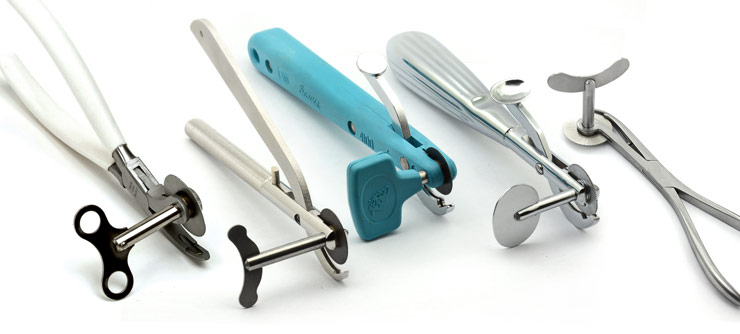
A stuck ring is one of those problems that sits right between jewelry and medicine. By the time it reaches your bench or trauma bay, the patient has usually tried soap, lotion, dental floss, and probably an opinion or two from the internet. Now it is on you to remove the band cleanly without adding more stress to an already swollen finger.
The tool you need starts with the band in front of you. Gold, titanium, tungsten, and ceramic do not respond to the same cutter, and a swollen finger does not leave much room for trial and error. This guide is for the people who handle stuck rings as part of the job: jewelers, ER nurses, fire crews, and EMS providers looking for a professional ring cutter that holds up under regular use.
If you are here because a ring is stuck on your finger right now, start with our home-method guide. It covers the soap, lubricant, and dental-floss techniques that resolve most stuck rings without cutting at all.
When Cutting Is the Right Call
Cutting is rarely the first move, but there are situations where it is the only one that protects the finger. Home methods handle the majority of stuck-ring cases. By the time someone walks into a jeweler or an ER for cutting, the easy options have been exhausted.
Reach for the cutter when:
- Home methods have been tried and failed, and the ring is still on
- The finger is showing signs of compromised circulation: pale or bluish tip, numbness, or worsening swelling
- There is real trauma to the finger or hand, including broken skin around the ring, and the ring is now acting as a tourniquet
- The ring profile (raised stones, internal bumps, or a comfort-fit on a swollen joint) makes any twist-off attempt risky
Skip the cutter when:
- The finger looks fine and the patient has only tried one method at home
- The ring can come off with one more round of lubrication, a proper string wrap, or a five-minute cold soak
A reminder for the patient side: rings should never be cut off by someone untrained. A professional ring cutter looks easy to operate. It is not. One slip and a stuck-ring problem becomes a stitches problem.
What to Look for in a Professional Ring Cutter
On yellow gold, almost any cutter will work. On titanium under pressure, the build difference shows up in the first 30 seconds. Below is what we check before putting one in our own kit or recommending it to a shop.
Overall Build
The cutter should be hand-held and compact, like an air-actuated rotary or a miniature hobby saw. Small does not mean underpowered. The rotary should accept interchangeable blades, because cutting cobalt is not the same job as cutting yellow gold. Cordless and battery-powered is preferable. EMS situations do not always have a wall outlet, and a power cord adds stress to a moment that already has plenty.
Side cutting pliers and a jeweler’s saw are useful backups for soft-metal cuts. Whatever the tool, finger protection always goes under the ring during the cut: a spoon, a strip of an old credit card, or a piece of plastic. Eye protection on the operator, every time.
Comfort of Use
Cutting requires a steady hand. A tool that fits poorly leads to a shaky cut, and a shaky cut around a finger is the last thing anyone needs. Pick a cutter that feels balanced and practice with it often. The kit you reach for in a real emergency should not be the kit you have never opened.
Ability to Sterilize
A ring cutter for jewelers usually stays in one shop and serves one operator, which keeps sterilization simple. A ring cutter on an ambulance or in an ER moves between patients, which makes sterilization essential. Look for “sterilizable” in the product description: autoclave-safe blades, or components that hold up to detergent and hydrogen peroxide.
Blade Type and Quality
Diamond discs are common and effective on titanium, tungsten, and cobalt. The mechanism is different from a steel saw: a diamond disc grinds the metal away rather than slicing through it, which is why a professional ring cutter equipped with one gets through hard metals a steel blade cannot touch. Carbide blades are another reliable choice for harder metals. The classic “Emergency Ring Cutter” with a steel blade still works on soft metals like yellow gold, but the blade dulls fast and will not get through titanium or tungsten. A cheap blade often turns into a broken blade mid-cut. Read reviews and pay for quality.
Cutting by Material
How to cut off a stuck ring depends almost entirely on the metal in your hand. A diamond disc that handles titanium is the wrong choice for soft gold, and a ring cracker that handles tungsten is the wrong choice for almost anything else. Match the tool to the material.
Cutting Titanium
There is a myth that titanium rings cannot be cut off. They can. With a diamond disc and water, a band comes off in 2 to 3 minutes. Without a diamond cutter, the same job takes 10 to 15. The grade of titanium affects timing. Commercially pure cuts faster than aircraft-grade, and aircraft-grade faster than extra-hard. To use a power cutter on a titanium ring:
- Place a finger guard between the ring and the finger.
- Seat the band in the notch on the finger guard.
- Bring the blade up to speed and start a steady drip of water on the disc before it touches the ring. Water keeps the diamond grit cool, because friction without it cooks the bond that holds the grit in place.
- Apply gentle pressure until you have made a cut.
- Make a second cut on the opposite side so the ring opens cleanly.
The blade guard sits between the ring and the finger the whole time, so the patient does not feel heat or discomfort during the cut. The same technique works on cobalt rings.
A Real Example: Wasp Sting in the ER
One of our customers lived this exact scenario. After a wasp sting on her finger triggered a swelling reaction her husband and antihistamines could not bring down, she walked into an ER worried about losing the finger. The ring was a titanium wedding band she had ordered from us a few years earlier. Soap, ice, and lotion did not move it.
The on-call doctor reached for what she described as “a small cutting device with a rotating blade similar to a Dremel,” which is the same setup the steps above describe. Thirty minutes later the ring was off in two halves and her finger was intact. (Disclosure: we replaced the ring free of charge in exchange for this testimony.)
For a visual walkthrough, our titanium and tungsten ring cut-off page has a demonstration video that runs through the cut from start to finish.
Tungsten, Ceramic, and Stone
Tungsten carbide is dense and strong, which is also why it cannot be sliced like gold. For these metals, how to cut off a stuck ring is more about cracking than slicing. Ceramic and stone bands like onyx or jade behave the same way. The tool for the job is a ring cracker, which stays on the finger and applies pressure until the band breaks. In our experience, the cracker is faster and less stressful for the patient than any cutter would be on these materials. Eye protection is non-negotiable.
If a cracker is not on hand, vice grip locking pliers do the same job. Place the pliers over the band and adjust the jaws to clamp lightly. Release, turn the tightening screw a quarter turn, and clamp again. Repeat until you hear the crack. The ring will break into two or more pieces and lift off the finger.
Gold, Silver, and Platinum
Gold and silver score quickly with a quality steel-blade cutter. Platinum is also soft but unusually dense. Reach for a high-quality high-speed steel blade rather than a diamond disc. A diamond disc fills with soft metal and dulls fast on the wrong material. A hardened tool steel blade keeps the cut clean and avoids “spreading” the band as the cut closes back together. To pull a band apart after a single cut, two strong hands and a couple of heavy-duty paper clips finish the job.
Why Bolt Cutters Are Not the Answer
Some sites suggest bolt cutters when figuring out how to cut off a stuck ring at home. We do not, and neither should anyone shopping for a professional ring cutter. The risk is in the tool itself. A bolt cutter delivers crushing force from both jaws at once, with no guard between the blade and the finger inside the ring. On titanium, the band often bends before it severs, compressing the swollen tissue underneath instead of relieving it. On tungsten, that same crushing force can shatter the band into sharp fragments.
Even a successful cut leaves jagged edges that drag across damaged skin as the ring lifts off, with no water cooling or fine speed control to mitigate any of it.
A bolt cutter on titanium is only safe under 5 to 6 millimeters of band width, and even then it is brute force you cannot really aim. Anything wider risks injuring the finger inside the ring. If a bolt cutter is the only option in a true emergency, cut both sides of the ring — but a professional ring cutter is the right tool every other time.
Frequently Asked Questions
What tool does a jeweler use to cut off a ring?
+
What types of rings cannot be cut off?
+
How do hospitals take off stuck rings?
+
How hard is it to cut a titanium ring?
+
The Avant-Garde Titanium Style Power Ring Cutter Kit
Our titanium ring cutter is a professional ring cutter built for the metals we work with every day. It ships as a complete kit for shops, clinics, and emergency departments that need a tool that holds up across patients and across years.
The kit ships fully assembled and includes:
- The ring cutter body with a finger-protecting blade guard
- A pre-installed diamond disc for titanium, tungsten, and other hard metals
- A tool-steel saw blade for platinum, gold, silver, and other soft metals
- A hex drive (installed) for use with a cordless electric driver
- A key drive for manual cutting on soft metals
- A water bottle for blade lubrication
- A battery-powered driver
The diamond disc and hex drive are available as standalone replacement parts, so the kit stays in service over time. Whether you need a ring cutter for jewelers, ER staff, or fire and EMS crews, reach out if you want help matching a professional ring cutter to your typical caseload.
